

beyonc songs |
- Video of adorable 6-year-old serenading baby sister with Beyonce’s ‘Brown Skin Girl’ goes viral - TheGrio
- Stream Beyoncé's 'The Lion King: The Gift' Album - NPR
- Inside Beyoncé’s Bold Bet to Get Americans to Listen to African Music - Rolling Stone
- Beyonce’s 'Lion King'-Inspired Album, And Africa As An Emerging Market - Forbes
- Beyoncé Remixed the Meaning of The Lion King - The Atlantic
- Beyonce's New Song With Blue Ivy Is An Anthem For Every "Brown Skin Girl" - Bustle
| Posted: 13 Aug 2019 03:36 AM PDT 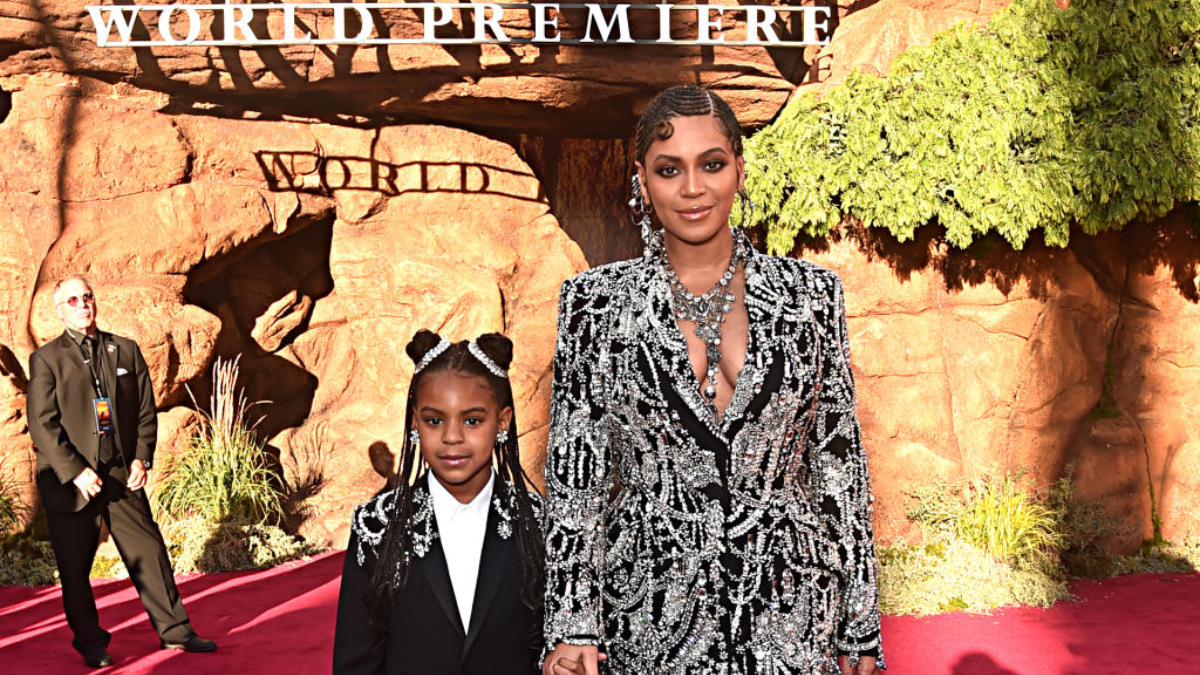 An adorable six-year-old has melted the hearts of the entire Internet for a video that went viral over the weekend of him singing words of a #BlackGirlMagic affirmation to his baby sister. In a video, Izaiah Tyrese aka Zay is heard singing the lyrics to Beyonce's latest hit song "Brown Skin Girl" to his squeezable, pudgy-cheeked 4-month-old sister, Parker Rose, who is seen laughing (and drooling) as she takes it all in. The song is off of the The Lion King soundtrack. READ MORE: Blue Ivy Carter lands first Billboard song with 'Brown Skin Girl' "Brown skinned girl, got skin just like pearls, the best thing in all the world…" are part of the lyrics meant to be an ode to darker complexioned Black girls to affirm their self-worth and beauty in a world that often idolizes women who don't look like them. Zay is the perfect picture of a doting big brother, seen lovingly rubbing baby Parker's cheeks as he belts out the song that Blue Ivy Carter also helps deliver on the track. "Big brother Zay @_bigdawgzay_ singing brown skin girl @beyonce to little miss P they love each other so much," their mother, Jessikah Marie wrote in an Instagram post that was viewed nearly 25,000 times. The post was also shared on Instagram by Beyonce's mother, Tina Knowles Lawson, exposing the cute sibling love to even more fans with 115,000 views. "Thank you thank you thank you @mstinalawsonfor sharing my babies. Literally baffled that my two little loves have went viral within hours. I wish P and Zay understood how cool this is right now," wrote their mother in response. READ MORE: They're too sexy: Blue Ivy can't watch Beyonce and Jay-Z in-concert shenanigans Here are some other reactions to this dynamic duo.
 |
| Stream Beyoncé's 'The Lion King: The Gift' Album - NPR Posted: 19 Jul 2019 12:00 AM PDT 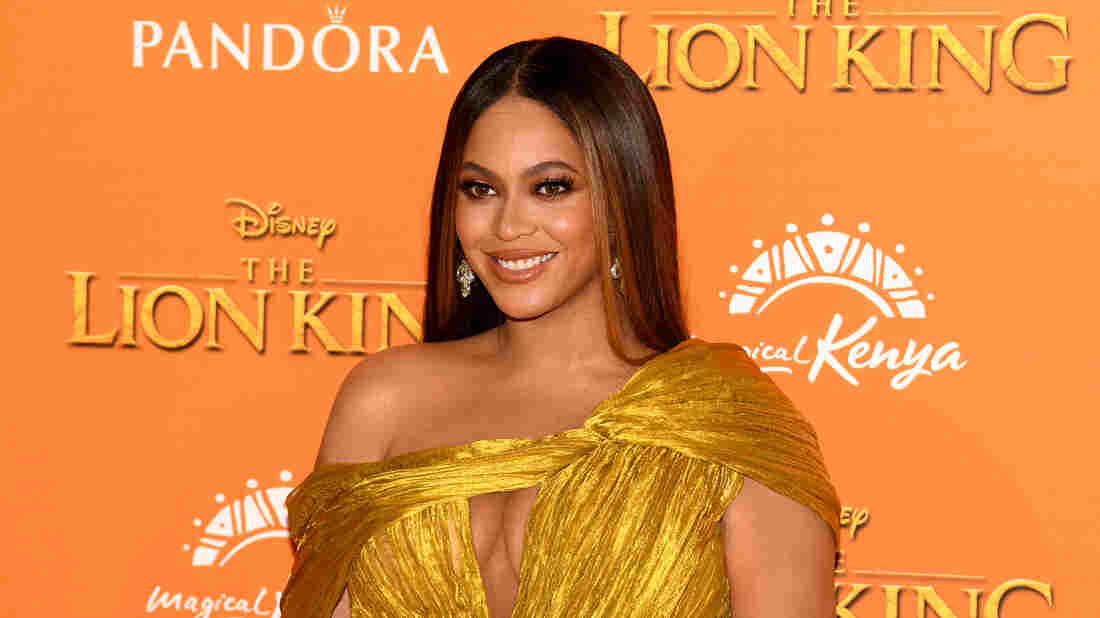 Beyoncé attends the European premiere of Disney's The Lion King on July 14 in London. Beyoncé's The Lion King: The Gift album is out now. Gareth Cattermole/Getty Images hide caption  Beyoncé attends the European premiere of Disney's The Lion King on July 14 in London. Beyoncé's The Lion King: The Gift album is out now. Gareth Cattermole/Getty ImagesThe Lion King: The Gift, Beyoncé's executive-produced album inspired by the 2019 motion picture, has been delivered. The 27-track album — 14 original tracks and 13 interludes from the Disney feature film — features an impressive set of headliners like Jay-Z, Pharrell Williams, Tierra Whack, Childish Gambino and Kendrick Lamar as well as global acts from Nigeria, Ghana, Jamaica and more. Lion King: The Gift pays tribute to Disney's 1994 animated classic The Lion King as well as the continent where it takes place. "This soundtrack is a love letter to Africa, and I wanted to make sure we found the best talent from Africa," Bey said in a Good Morning America interview. "I wanted to be authentic to what is beautiful about music in Africa." Beyoncé, who plays Nala in the new film, made it a point to feature a multi-genre artists and producers for a sound that's reflective of the diaspora of African cultures. While some songs like "MOOD 4 EVA," which is produced by Bey and DJ Khaled, feature a straightforward, cinematic R&B sound, others, like Burna Boy's "Ja Ara E" or the heartfelt "Brown Skin Girl" featuring Saint JHN, Wizkid and Blue Ivy Carter, are held down with African-influenced beats and percussion by producer P2J. Nigerian artists Tekno, Yemi Alade and Mr. Eazi form an Afrobeat trifecta with "Don't Jealous Me" and Ghanaian musician Shatta Wale and electronic trio Major Lazer each add their own flavor to "Already." Up-and-coming Cameroonian singer Salatiel has a shining introduction on the track "Water," singing alongside Bey and Pharrell. The album-ender, "Spirit," was the sole single shared before the album and was released earlier this week with a sprawling music video. YouTube This new release notably marks the fourth lyrical appearance of Blue Ivy Carter, first daughter of Queen Bey and Jay-Z. Previously, Blue could be heard on her mother's 2013 self-titled album, on her father's album 4:44, and on the power-couple's first official collaborative album, Everything Is Love.   The album cover art also adds a sense of symbolism and power: Two gold lions, tied together as one, carry over messages of unity from the film. Beyoncé provides a modern interpretation and vision for the story many of us already know. "I feel like the soundtrack becomes visual in your mind," Beyoncé told GMA. "It's a soundscape. It's more than just the music because each song tells the story of the film."  |
| Inside Beyoncé’s Bold Bet to Get Americans to Listen to African Music - Rolling Stone Posted: 19 Jul 2019 12:00 AM PDT  Yemi Alade had a cold. Last month, the Nigerian star, who recently passed the one-million-subscribers mark on YouTube, flew to Los Angeles to work on a project by Beyoncé. But when Alade landed, she discovered she no longer had a singing voice. "I couldn't understand what had happened to me," she says. "I could talk, but I couldn't even hit the lowest key." Panicked, she immediately went into full recovery mode. "I went for a steaming so I could get more moisture," Alade recalls. "I jacked up on vitamin C. I went in on lemon and ginger. I felt like an herbalist, I was going in on everything." When Alade hit the studio the next morning, "the excitement awoke my voice" — she could sing. As a result, she appears twice on Beyoncé's The Lion King: The Gift, which is both a companion album to accompany the release of a new version of Disney's famous film from 1994 and a tribute to several strains of contemporary African pop from one of the United States' biggest stars. Alade is joined by other Nigerian luminaries: Burna Boy, Tiwa Savage, Tekno, Mr. Eazi, and Wizkid. Beyoncé also looked beyond Nigeria as well, recruiting Shatta Wale (Ghana), Salatiel (Cameroon), Moonchild Sanelly (South Africa), and Busiswa (also South Africa) to contribute to The Gift. Artists and producers involved in the album believe it will be a major boost for their international footprint — especially in America, the world's biggest music market, which has been far less welcoming to African artists than the U.K. or France. "There have been samples [of African music in American pop] here and there, things like Drake and Wizkid collaborating [on 'One Dance']," says Guilty Beatz, the Ghanian producer who worked on three different tracks from The Gift. "But it's just been little things. Now that Beyoncé released a whole album, this will open the gateway." Word of The Gift started to spread in the music industry at the end of spring. "Mid-may we started hearing rumblings of Beyoncé working on a Lion King project," says James Supreme, an A&R at Universal Music Publishing Group. "One of our colleagues, Ari Gelaw, has a great relationship with Beyoncé's A&R, Mariel Gomerez. We reached out, and Mariel opened her arms." Supreme put Gomerez in touch with a young writer-producer named Michael Uzowuru, a first-generation Nigerian American whose credit list includes Frank Ocean's Blonde and Jorja Smith's Lost & Found. "There was a very specific vision [on The Gift], and Michael really knows how to execute a vision," Supreme says. That vision, according to Salatiel, was to make the album "very African." "[Beyoncé] insisted on having the African spirit on it," Salatiel adds. Sureeta Nayyar — who does international A&R for UMPG and has a keen ear for Nigerian acts — also entered into conversations with Beyoncé's team. "As a company, we have a really strong international presence, with Burna Boy [who is signed to UMPG] being the most significant African artist right now," Nayyar says. "We were jumping on a moving train," she continues, but Burna Boy ended up being one of the few artists other than Beyoncé to get a solo showcase on The Gift. Much of The Gift came together in a studio complex in Los Angeles. "For almost two months, Michael went to the studio every single day," Supreme says. "The way he put it was there were so many different rooms, with creatives cycling in and out." "There were several studios, and every room had a theme," Alade adds. Many of the artists who worked on The Life are cagey about the details of its creation thanks to what one participant calls an "ironclad NDA." But several of the African singers and producers traveled to L.A. to oversee songs in person. When Burna Boy arrived at the studio, he watched the trailer for The Lion King reboot to get into the right mindset before writing "Ja Ara E." "It's a new Lion King where [the animals] actually look like [real] lions," he says. "I hadn't seen that — it tripped me out. The management team was there give me one or two notes; they had to tell me what was going on." Guilty Beatz also flew out from London for a five-day stint on the West Coast working on instrumentals. "I didn't know who would end up on which song," he says. But the producer knew what he wanted his beats to sound like: "I'm Ghanaian, so I wanted to bring that cultural sound [of the genre] highlife." Compared to the programmed pulse of contemporary Nigerian afrobeats, "highlife is more guitar-based, slower, with shakers and more percussion elements like congas and bongos," Guilty Beatz explains. This influence creeps into two of the most effective beats on The Gift: "Find Your Way Back," with its featherweight guitar riffs, co-produced by Bubele Boii and Magwenzi, and most of all in "Keys to the Kingdom," where languid verses give way to an insistent, jabbing hook. The South African producer DJ Lag also spent a week in L.A. tinkering with "My Power," which channels the style known as gqom. Unlike gentle highlife and swaying, mid-tempo afrobeats, gqom is skeletal, smacking music set around 126 beats per minute. DJ Lag sent six instrumentals to Beyoncé ahead of time; the singer took two of them. When he got to L.A., "they already had chosen what they wanted," he says. "The only thing I did at the studio was work with the voices and add Busiswa's part on the beat."
By the time Alade arrived in L.A. in June — and recovered her voice — she says Beyoncé had already amassed a stockpile of around 150 songs. "There was a huge board with all of the artists that were supposed to be a part of the project," she recalls. Alade was armed with "some songs that were not going to make it onto my upcoming album;" Beyoncé's team "also played some ideas that they had," including early versions of "Don't Jealous Me" and "My Power," the album's two most propulsive tracks. Alade hopped on both. For Alade, the timing of The Gift is fortuitous: She has a new album, Woman of Steel, arriving before the end of the summer. The same is true for Burna Boy, who will release African Giant next week, and DJ Lag, who released the Steam Rooms EP with Okzharp on Friday. The Gift is also a shrewdly timed release for Beyoncé, who gets to embrace and elevate styles of music that are currently rising in popularity around the globe, even if they have not yet crashed into the American mainstream. Beyoncé now plays a role in potentially pushing some of this music into places it has not yet reached. Uzowuru sees Beyoncé's latest album as an afrobeats starter-kit for curious listeners. "This will give a great reference point for people to get into that music who haven't before," he says. "People need something like this to understand the rhythm, the melodies, the grooves. Beyoncé made a great job of making it accessible." Alade calls The Gift "yet another awakening, another step in the right direction." Collaborative albums like this one have "advantages on both sides, for the U.S. and for Africa," the singer says. But there is still more work to do. "The idea," Alade adds, "is to close the gap."  |
| Beyonce’s 'Lion King'-Inspired Album, And Africa As An Emerging Market - Forbes Posted: 26 Jul 2019 12:00 AM PDT 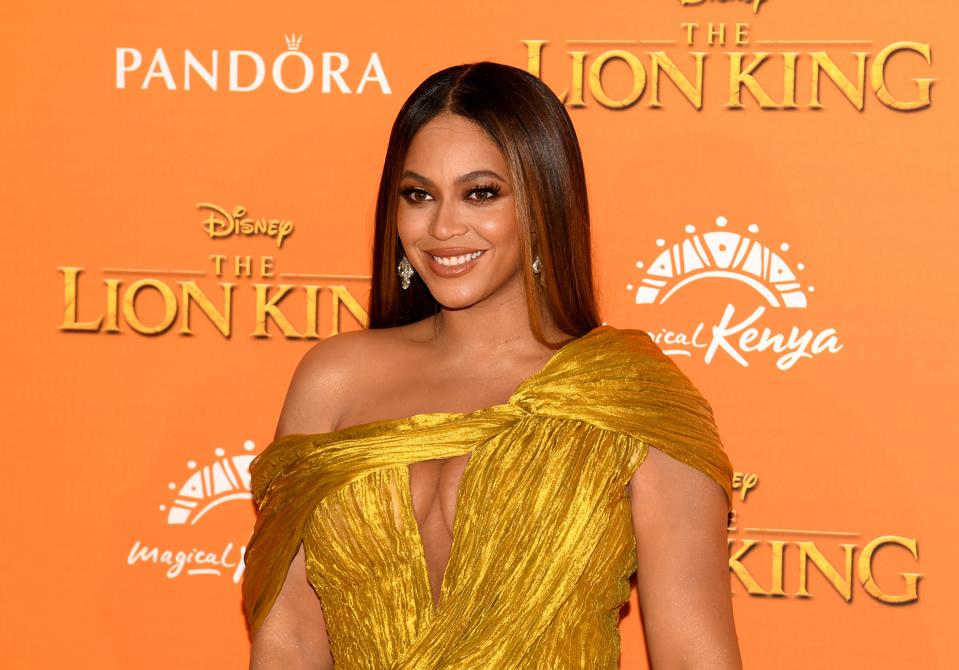 LONDON, ENGLAND - JULY 14: Beyonce Knowles-Carter attends the European Premiere of Disney's "The Lion King" at Odeon Luxe Leicester Square on July 14, 2019 in London, England. (Photo by Gareth Cattermole/Getty Images for Disney) Gareth Cattermole/Getty Images for Disney"The Lion King" is an iconic story and set of songs with unparalleled enduring resonance. From "Hakuna Matata" to "Circle Of Life" to "Can You Feel The Love Tonight" by Elton John and Tim Rice, the music from the original 1994 animated film made big cross industry waves. "Can You Feel The Love Tonight" sold 11 million copies world-wide and won the Academy Award for Best Original Song at the 67th Academy Awards in March 1995. The song also won Elton John the Grammy Award for Best Male Pop Vocal performance in 1994. Fast-forward, over two decades and Jon Favreau's hyper-realistic CGI adaptation of "The Lion King," has positioned itself to make similar waves, having sold a record-breaking $543.6 Million in global ticket sales, as of last weekend. Recording artist Beyonce is not only the voice of Nala but unveiled a Lion King-inspired album entitled"The Gift" on July 19. To date, the album has seen over 60 million audio and video streams in the U.S. alone, according to Nielsen. A music video for the song "Spirit," which is featured on the film's playlist soundtrack, debuted earlier Tuesday July 16th, and has received over 23 Million YouTube views to date, globally. A second music video was released July 19 featuring "Spirit" and a song entitled, "Bigger," which has earned over 5 million views on YouTube. Beyonce called the soundtrack "a love letter to Africa," in an interview with Robin Roberts after the "Spirit" video premiere on Tuesday. The 27-song album includes both songs and short clips from the film. In addition to an internationally star-studded featured artist list, the album highlights prominent and upcoming African talent including: Tekno, Yemi Alade, Mr Eazi, Lord Afrixana, Burna Boy, Kendrick Lamar, JAY Z, Childish Gambino, Oumou Sangare, Salatiel, Pharrell Williams, SAINt JHN, Wizkid, Blue Ivy Carter, Tiwa Savage, Shatta Wale, Major Lazer, Tierra Whack, Moonchild Sanelly, Nija, Busiswa, DJ Lag, 070 Shake and Jessie Reyez. When describing the album, Beyonce notes that, "A lot of the drums, chants, all of these incredible new sounds are mixed with some of the producers from America. I feel the soundtrack, it becomes visual in your mind, it becomes a soundscape because each song tells the story of the film." Beyonce brought support and awareness to African culture, art, music and fashion in her previous work. Her actions speak to larger artistic shifts toward global cultural amalgamation or merging, a musical ecosystem with disintegrating borders, and to the variety of different forms in which this can be actualized. "It's a tipping-point moment," notes Tuma Basa, Director of Urban Music at YouTube, and the person who created the African Heat playlist during his previous position at Spotify. According to the IFPI, the African economy is growing rapidly. The mobile broadband penetration in Sub-SaharanAfrica increased from 2 percent in 2010 to 11 percent in 2013, according to the International Telecom Union report. Additionally, the IFPI notes that: "Despite its huge influence on music repertoire across the globe, most countries in Africa have not historically been significant markets for the international music industry. Today, that is beginning to change. Digital technology is enabling the recording industry to effectively reach mass numbers of consumers across Africa for the first time. Across the continent, international record companies are working to establish innovative services and invest in A&R." On May 2, 2019, Nigerian singer-songwriter, Tiwa Savage, who is featured on "The Gift," alongside Mr. Eazi, signed an exclusive global recording agreement with Universal Music Group. Under the terms of the deal, UMG will release Savage's future music in over 60 countries, worldwide. African music has been an inspiration for centuries, for many around the globe. This moment of increased awareness could presage a growing opportunity for African artists to independently break into the North American market.  |
| Beyoncé Remixed the Meaning of The Lion King - The Atlantic Posted: 26 Jul 2019 12:00 AM PDT  When it was released in 1994, The Lion King was billed as Disney animation's first original story: No fairy tale inspired it. But in the development process, the creators noticed—and then played up—similarities to Shakespeare's Hamlet in the script they'd come up with. They thought about the Old Testament figures Joseph and Moses too. Some viewers called out similarities to the Japanese cartoon Kimba the White Lion. Others saw a resemblance between Simba and the 13th-century ruler often referred to as the Lion King of Mali. Still others who've seen the original or the 2019 remake think of the Egyptian myth of Horus. Or of Black Panther's T'Challa. Or of Game of Thrones' Jon Snow. The Lion King resembles so many other works less because it is retelling an old story and more because it is telling a simple story, one that people across cultures can't help but see themselves in. It is about exile, awakening, and restoration; it is about growing up, death, and duty. Narratives of its kind are like some lightweight super-material, able to bend to multiple purposes, but not break. The 1994 Lion King radiated madcap whimsy and awe. The new one is serious and clenched. Both get their messages across. No wonder that Beyoncé gravitated toward The Lion King. Fundamentally, she's a mythmaker. Again and again, she's taken universally fascinating narratives and refitted them so that they can be newly enjoyed up close, in the detail work, and from afar, as a whole picture. Her 2016 project Lemonade concerned an ultra-abstract, almost elemental story: sour turning sweet, lemons becoming lemonade. But it was also a tale about betrayal and reconciliation in marriage. It was also about the possibility of black families disarming centuries-old traps set for them. As music, it thrived on inversions and surprising alchemy: rock rages that felt good, swaying reggae that felt bad, forgiveness ballads disguised as breakup songs and vice versa. The Lion King's remake presented Beyoncé with the chance to participate in a surefire cultural phenomenon without having to spend too much time in the voice-acting studio. But undoubtedly the social implications appealed too. The new Lion King takes what had largely been a white fantasy about Africa and repopulates it with black actors, somewhat in the manner that Beyoncé has used America's biggest stages—the Super Bowl, Coachella—to flip regressive race hierarchies. It also represented an opportunity to record music that uses the film's potent themes for Beyoncé's own purposes: connecting the spectacle of her own success to a greater whole. Released a week after the official soundtrack's rerecordings of Hans Zimmer's 1994 score and Elton John's 1994 show tunes, Beyoncé's contribution, The Gift, is in the tradition of star-studded "soundtrack albums." Beyoncé (and her team) oversaw A&R and production, and she sings on most of the songs, and so it's not a stretch to consider The Gift a Beyoncé album—even if one major goal is spotlighting African talent. She called the project "sonic cinema," which may sound pretentious, but it's really a way of saying it's another of her sing-along exercises in storytelling and signifying. The first song, "Bigger," is a restrained mood-setter on which she sings and raps over sustained organ chords and washes of cymbals. She's done tone poems like this before—more overtures than pop songs—but this one has the distinction of being straightforwardly inspirational and written in the second person. She's telling a "you" that you're "part of something way bigger": "Not just a speck in the universe / Not just some words in a Bible verse / You are the living word." As if to acknowledge the brazenness of her giving such a direct pep talk, she eventually sings, "I'm not just preachin'; I'm takin' my own advice." (Who says Beyoncé's not humble!) The tie here with the movie is clear. The Lion King's first act follows a young scion being taught about the vast designs he's part of: royal succession (Simba will rule "everything the light touches") as well as the ecological and existential "circle of life." For "Bigger," Beyoncé is taking on the role of teacherly Mufasa, and you are Simba. That you, of course, can include the listener, but moreover, it refers to Beyoncé's own three kids. "I'll be the roots, you be the tree / Pass on the fruit that was given to me / Legacy, ah, we're part of something way bigger," she sings, sending her voice up into piercing trills and back down again. All of this is classic Beyoncé magic, going very wide and very personal at once. She doesn't quite maintain so tight a web of connected meanings throughout. Much of The Lion King's plot turns on exile—Simba's estrangement from his birthright—but The Gift doesn't make super obvious how exactly Beyoncé, a star since age 18, relates to that theme. She could have shoehorned in her marital drama or journey toward greater creative independence, but instead, the middle portions of the album sport swaggering, triumphal fare. Her Jay-Z and Childish Gambino workout "Mood 4 Eva" comes with an intro suggesting it's a version of "Hakuna Matata," but the celebration that ensues isn't the no-worries kind: "When we walk up in the club I need them sirens goin' off / Then we can look up in the sky / The tears we cry let us know that we alive," Beyoncé bellows, sanctifying the impulse to turn up. While in the middle portion of the movie Simba avoids greatness, the song (and much of the album) is all about embracing it. Jay-Z compares himself to, among other black idols, Mansa Musa, a legendarily wealthy descendant of the Lion King of Mali. Really, the exile preoccupying The Gift is mostly implied. It's political, spiritual, and demographic exile; it's racial disconnection and erasure. "This soundtrack is a love letter to Africa," Beyoncé said in a Robin Roberts interview, explaining why she set out to fill the album with voices from that continent. This "love letter" would seem to respond to the whiteness of the original Lion King soundscape—only "Circle of Life" featured African singers—as well as extend Beyoncé's interest in connecting her own work with wider black experiences. To be sure, it's a flawed attempt: The Gift bafflingly omits East African voices, despite The Lion King's deep debt to that region. But the African sounds that do make it in give the album its sense of purpose while also adding rich and varied textures. The continent's influence is partly rendered in the music itself. On the mostly solo Beyoncé track "Find Your Way Back," for example, the airy guitar strums of Ghanaian highlife evoke a twilight between hope and melancholy. Later, the thrilling "My Power" dramatizes the climactic Scar-Simba battle to the punishing beat of gqom, South African house music. Throughout The Gift, the rhythmic trickiness of Nigerian Afrobeats and the lilt of Jamaican dembow not only widen the expected palette, but also serve as reminders of how much the African diaspora already shapes Western pop. To many Americans, the novelty of the arrangements will be noticeable, but not disorienting, as their drive-time radio has been trending toward these sounds already. What's most exciting is the dynamism of the African voices. An early track, "Don't Jealous Me," showcases the Nigerian artists Tekno, Mr Eazi, and Yemi Alade, who each radiate intoxicating confidence across their varying vocal tones and cadences. On "Ja Ara E," the Nigerian star Burna Boy employs his smooth, sad delivery to vest lyrics about a search for "miraculous blessings" with a pungent sense of longing. The power of "My Power" owes in large part to an indomitable verse from Busiswa and a taunting, catchy one from Moonchild Sanelly, both of whom are from South Africa. There are, however, times when the many higher goals of the album seem to short-circuit the songwriting. Beyoncé knows what an anthem sounds like, but most of the collaboration-heavy songs don't earn that label. Rather than accumulating energy, tracks such as the otherwise exciting "Don't Jealous Me" and the fluttery "Keys to the Kingdom" just rotate through verses and then, unceremoniously, end. It's likely no coincidence that the punchiest songs are the ones where she herself gets to connect the political, personal, and mythical themes of the project. For example, "Otherside" moves from beautiful to stunning when the Nigerian producer Bankulli enters by chanting in Yoruba and Beyoncé joins him, low and smoldering, in Swahili. "Mababu Katika Mawingu" goes their refrain, which translates to "grandfathers in the clouds"—a nod not only at a key Lion King scene, but also at the shared heritage that Beyoncé is trying to evoke and reclaim throughout the album. The catchiest and sweetest track is "Brown Skin Girl," which has the Guyanese-American singer SAINt JHN and the Nigerian artist Wizkid join Beyoncé in trying to undo the stigmas of colorism. The breezy sing-along serves as an implicit rebuke to the years of questioning Beyoncé has received about her own relationship with her skin color, but she's not just managing her image here—she's doing social work with a personal edge. Blue Ivy, the target of her serenade, adorably sings the final verse, and the connection is clear: Her daughter is an heir to greatness as much as Simba is. Of course, anyone can find ways to plug into stories of destiny, as such stories have been told many ways—but never quite like this. We want to hear what you think about this article. Submit a letter to the editor or write to letters@theatlantic.com.  Spencer Kornhaber is a staff writer at The Atlantic, where he covers pop culture and music.  |
| Beyonce's New Song With Blue Ivy Is An Anthem For Every "Brown Skin Girl" - Bustle Posted: 19 Jul 2019 12:00 AM PDT 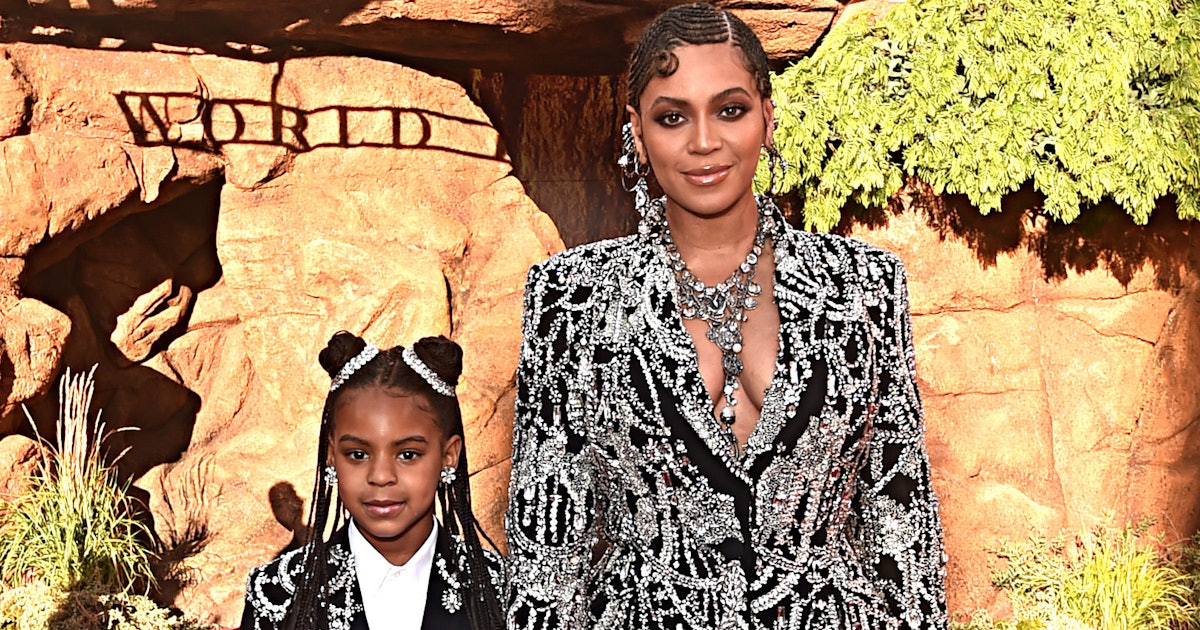 Beyoncé's new The Lion King companion album, The Gift, is full of incredible collaborations. But the most exciting one for Bey fans just might be Beyoncé's new song with Blue Ivy on The Gift. "Brown Skin Girl," also featuring WizKid and SAINt JHN, is a celebration of the beauty of black and brown women and girls. Blue Ivy starts and ends the inspiring track — and even received a writing credit for the song, per Genius — which led the internet to praise both the beautiful message behind "Brown Skin Girl" and Blue Ivy Carter's talents. The Lion King: The Gift has a total of 27 tracks thanks to a mix of dialogue from the rebooted film and new Beyoncé-curated songs. The album features artists like her Lion King costar Donald Glover (as Childish Gambino), Pharrell Williams, Kendrick Lamar, Major Lazer, Jessie Reyez, and her husband JAY Z. But as Beyoncé's intention behind The Gift was to be "a love letter to Africa," she also made sure to work with African artists like Yemi Alade, Burna Boy, Salatiel, Tiwa Savage, Shatta Wale, and WizKid. WizKid is one of the featured artists on "Brown Skin Girl," alongside Blue Ivy and SAINt JHN, who open the song with the chorus: "Brown skin girl/Your skin just like pearls/The best thing in the world/Never trade you for anybody else." And the lyrics only get more moving from there. Beyoncé - Topic on YouTube When Beyoncé joins in on the song, she shouts out to some other "brown skin girls" — Naomi Campbell, Lupita Nyong'o, and her old Destiny's Child bandmate Kelly Rowland. Beyoncé's verse uses these women to highlight the beauty of brown skin ("Melanin too dark to throw her shade," she sings) and encourages Blue Ivy to love herself. "Oh, have you looked in the mirror lately?/Wish you could trade eyes with me/There's complexities in complexion/But your skin, it glow like diamonds," Beyoncé continues, seemingly addressing Blue Ivy directly. "I love everything about you, from your nappy curls/To every single curve, your body natural/Same skin that was broken be the same skin takin' over." She also makes sure to tell her oldest daughter that she's beautiful. Clearly by Twitter's reaction, Beyoncé is encouraging brown skin girls everywhere to feel proud — not just her daughters Blue Ivy and Rumi. There's so much to love about the song, but the inclusion of Blue Ivy may be the highlight. The 7-year-old daughter of Beyoncé and Jay-Z, who already popped up in her mom's "Spirit" music video, has been given the agency to showcase her vocal and writing abilities on "Brown Skin Girls." So clearly these parents are practicing what they preach (sing?) by letting Blue Ivy show her value at such a young age. And fans can't get enough of it, predicting that Blue Ivy could perhaps even one day eclipse her mom's star power (if she hasn't already in your eyes). "Brown Skin Girl" ends just as it should — with Blue Ivy singing about how brown skin girls are the best in the world. So along with helping promote African music to the masses, one of the other greatest gifts Beyoncé — and Blue Ivy — provide on The Lion King: The Gift is that of encouraging brown skin girls to embrace who they naturally are and know their worth.  |
| You are subscribed to email updates from "beyonc songs" - Google News. To stop receiving these emails, you may unsubscribe now. | Email delivery powered by Google |
| Google, 1600 Amphitheatre Parkway, Mountain View, CA 94043, United States | |





0 Yorumlar